
Ist Choice 3rd March 2nd Choice 12th January
Australia Day should unite, not divide. The proposal for a New Australia Day on January 12 is about creating a more inclusive national day that acknowledges our shared history, respects Aboriginal and Torres Strait Islander peoples as custodians of this land, and reflects who we are as a modern Australia. It does not seek to redefine independence or constitutional milestones, but to move away from a date associated with harm toward one that encourages unity, reflection, and respect for all Australians.
New Australia Day
The Obvious Choice for All Australians to Come Together.
1st Choice – 3rd March

2nd Choice – 12th January
New Australia Day
Moving Australia Day from January 26th to January 12th not only honours our history but also respects Indigenous people. . Celebrating this date promotes unity and inclusivity. Transitioning to January 12th acknowledges our past while creating a sense of togetherness and respect for all Australians, making it an appropriate day to commemorate the naming of our continent and the Indigenous people as custodians of this Beautiful land called Australia
Finding a date
Why January?
January is proposed because it marks two important beginnings: the beginning of the year 1824, when the name Australia came into official use, and 2008, when the Australian Parliament first formally recognised Aboriginal and Torres Strait Islander peoples as the custodians of this land.
Wording of Acknowledgement of country:
“We acknowledge the traditional owners and custodians of country throughout Australia and acknowledge their continuing connection to land, waters and community.”
Significance of the number 12
Why 12th
The number twelve has been significant throughout human history for a variety of reasons, many of which are rooted in cultural, religious, and practical considerations. Here are some of the reasons why the number twelve is important in various contexts:
Completeness and Wholeness: The number 12 is often seen as a symbol of completeness because it is composed of the numbers 1, 2, 3, 4, and 6, which are all considered to be numbers of significance in different contexts. For example, there are 12 months in a year, 12 hours on a clock, and 12 signs of the zodiac.
Harmony and Balance: The number 12 is divisible by 2, 3, 4, and 6, which are all numbers that represent harmony and balance. This divisibility contributes to the idea of completeness and balance associated with the number 12.
Time and Space: The number 12 is often used to represent time and space. For example, there are 12 hours on a clock, and some ancient cultures divided the day into 12 parts. In geometry, a dodecahedron is a polyhedron with 12 faces, further emphasizing the connection between the number 12 and space.
Cycles and Renewal: The number 12 is also associated with cycles and renewal. For example, there are 12 months in a year, representing the cycle of seasons and the passage of time. In astrology, there are 12 signs of the zodiac, each representing different aspects of human experience and personality.
Overall, the symbolism of the number 12 is rich and multifaceted, and it carries different meanings depending on the cultural, religious, or spiritual context in which it is considered.
Australia’s Legal Independence What Happened in 1986
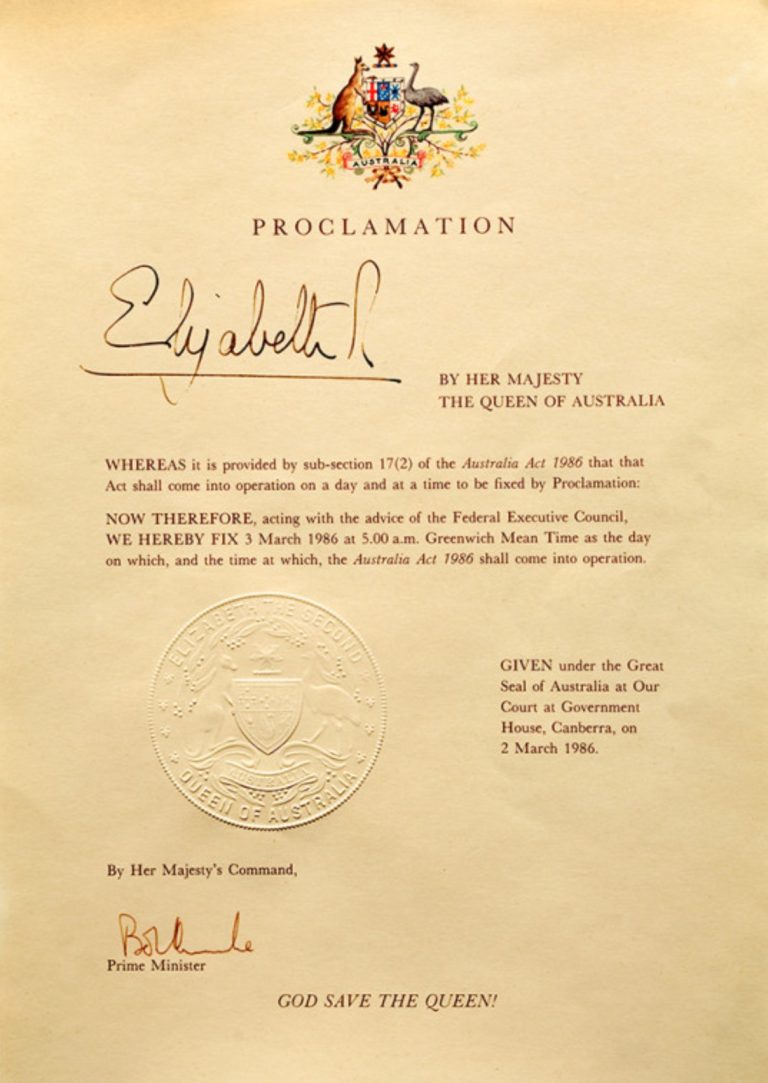
Australia’s independence did not occur on a single day, but developed gradually over many decades. One of the most important milestones in this process was the Australia Act 1986, which came into effect on 3 March 1986.
The Australia Act 1986 is widely recognised as the final step in Australia’s constitutional independence from Britain. It removed the remaining authority of the British Parliament and British courts over Australian law. From this date, the United Kingdom Parliament could no longer legislate for Australia, and appeals from Australian state courts to the British Privy Council were abolished.
Prior to 1986, Australia was already independent at the national level. The Statute of Westminster Adoption Act 1942 had confirmed the Australian Government’s legislative independence from Britain. However, the Australian states still retained certain constitutional links to the United Kingdom. Some state laws required approval from the monarch, and British ministers continued to play a formal role in advising the Crown on state matters.
The Australia Act 1986 addressed these remaining arrangements. It was passed by the Australian Parliament, the six state parliaments, and the United Kingdom Parliament, ensuring that all levels of government were constitutionally aligned. From that point onward, Australian states were fully sovereign within Australia’s legal system, and all Australian laws derived their authority solely from Australian institutions.
When introducing the legislation, Attorney-General Lionel Bowen described it as completing “the process of constitutional development commenced at the beginning of this century,” replacing outdated arrangements with ones reflecting Australia’s status as an independent and sovereign nation.
A proclamation signed by Queen Elizabeth II formally fixed 3 March 1986 as the date the Australia Acts came into operation. From that date, Australia’s legal and constitutional independence from Britain was complete.
Australia’s Independence
Australia’s Independence, the King, and the Governor-General
Questions & Answers
Q1: Is Australia fully independent?
Yes. Australia is fully independent.
Australia became fully independent on 3 March 1986, when the Australia Acts 1986 came into force.
These Acts removed all remaining legal and constitutional authority of the United Kingdom over Australia.
Q2: What changed on 3 March 1986?
The Australia Acts:
- Ended the UK Parliament’s power to make laws for Australia
- Ended all appeals from Australian courts to UK courts
- Confirmed that Australia controls its own Constitution and legal system
From this date onward, no foreign parliament or court has authority over Australia.
Q3: Does Australia’s independence depend on becoming a republic?
No.
Independence and republicanism are separate issues.
Australia is fully independent while remaining a constitutional monarchy by choice.
Q4: Who is the King of Australia?
Australia has its own King — the King of Australia.
While the same person also happens to be King of the United Kingdom, these are separate legal roles.
The King does not govern Australia from the UK.
This arrangement is known as a personal union, not foreign rule.
Q5: Does the King of Australia have political power in Australia?
No.
The King has no direct political or governing power in Australia.
By constitutional convention:
- The King acts only on the advice of the Australian Prime Minister
- The King does not interfere in Australian politics
- The role is ceremonial and symbolic
Q6: What is the role of the Governor-General?
The Governor-General is the King’s representative in Australia and exercises executive power under the Australian Constitution.
The Governor-General is appointed by the King on the advice of the Australian Prime Minister.
Q7: What does the Governor-General do?
The Governor-General performs key constitutional functions, including:
- Granting Royal Assent to laws passed by Parliament
- Appointing Ministers, judges, and senior officials
- Summoning, proroguing, and dissolving Parliament
- Issuing writs for federal elections
- Acting as Commander-in-Chief of the Australian Defence Force
- Performing ceremonial and representational duties
Q8: Does the Governor-General act independently?
Normally, the Governor-General acts on the advice of the elected government.
However, the Governor-General holds reserve powers, which can be exercised independently in rare constitutional crises to ensure government operates within the Constitution.
Q9: Did the role of the Governor-General change after 1986?
Yes, in an important way.
After 1986:
- The Governor-General became the final constitutional authority within Australia
- No UK authority exists above or beyond the office
- All constitutional processes are entirely Australian
This reinforced Australia’s full sovereignty.
Q10: Who is Australia’s Head of State?
Legally:
- The King of Australia is the Head of State
In practice:
- The Governor-General performs almost all Head of State functions within Australia
This is a recognised and accepted constitutional arrangement.
Q11: Does the UK have any legal control over Australia today?
No. None whatsoever.
- The UK Parliament cannot legislate for Australia
- UK courts have no jurisdiction over Australia
- The UK government has no authority in Australian affairs
Australia is a fully sovereign nation.
Q12: Why is this important?
Understanding Australia’s constitutional independence helps clarify discussions about:
- National identity
- Symbols such as the flag
- Australia Day
- The role of history and heritage in modern Australia
These discussions can take place without misunderstanding Australia’s legal status.
Sources & Citations
Sources & Citations
Australia Acts 1986
- Australia Act 1986 (Cth)
Federal Register of Legislation
https://www.legislation.gov.au/C2004A03181 - Australia Act 1986 (UK)
UK Legislation
https://www.legislation.gov.uk/ukpga/1986/2
These Acts jointly ended all remaining UK legislative and judicial authority over Australia and commenced on 3 March 1986.
Australian Constitution
- Commonwealth of Australia Constitution Act
Federal Register of Legislation
https://www.legislation.gov.au/Details/C2013Q00005
Key sections referenced:
- Section 1 – Legislative power
- Section 61 – Executive power vested in the King and exercisable by the Governor-General
- Section 68 – Commander-in-Chief of the Defence Force
High Court of Australia
- Sue v Hill (1999) 199 CLR 462
High Court of Australia
Confirmed that the United Kingdom is a “foreign power” under the Australian Constitution following the Australia Acts, reinforcing Australia’s full sovereignty.
Summary reference:
https://www.hcourt.gov.au/cases/case_s39-1998
Governor-General – Official Role
- Office of the Governor-General of Australia
“The Role of the Governor-General”
https://www.gg.gov.au/about-governor-general/role-governor-general - Parliament of Australia – Governor-General
https://www.aph.gov.au/About_Parliament/Parliamentary_Departments/Parliamentary_Library/Fact_sheets/Governor-General
Head of State and Constitutional Monarchy
- Parliamentary Library – Australia’s System of Government
https://www.aph.gov.au/About_Parliament/Parliamentary_Departments/Parliamentary_Library/pubs/BriefingBook46p/Monarchy - Australian Government – Department of Foreign Affairs and Trade (DFAT)
“Australia’s system of government”
https://www.dfat.gov.au/about-us/publications/fact-sheets/australias-system-government
Independence and Sovereignty
- National Archives of Australia
“Australia’s Constitutional Development”
https://www.naa.gov.au/help-your-research/fact-sheets/constitutional-history - Museum of Australian Democracy
“Australia’s Path to Independence”
https://moadoph.gov.au/democracy/australias-path-to-independence
Suggested citation disclaimer (optional but useful)
You may wish to add this at the bottom of the page:
This information is provided for educational purposes and reflects Australia’s constitutional and legal framework as established by law and recognised by Australian courts and government institutions.
Experience the beauty and spirit of Australia with our new song, “Australia Our Land So Free”.
Dive into a musical journey that celebrates the diverse landscapes, unique wildlife, and the unbreakable spirit of unity that defines our nation.