Time Line
1899 — First Use in Sport - Joe Darling’s Australian cricket team wears green and gold in the Ashes series.
1908–1912 — Early Olympic Use Australian athletes begin using green and gold informally at international events.
1930s–1940s — Sporting Tradition Grows Green and gold become the standard colours for cricket, hockey, cycling, and other national teams.
1960s–1970s — National Identity Strengthens The colours appear widely in uniforms, merchandise, and international representation
1984 — Official Proclamation Governor‑General Sir Ninian Stephen formally proclaims green and gold as Australia’s national colours.
Growing Tradition Through the Early 1900s
As Australia competed more frequently overseas, athletes in sports such as cycling, hockey, and rowing began adopting green and gold uniforms. The colours were not yet official, but they were becoming recognised as distinctly Australian.
The 1940s — A New Generation Continues the Legacy
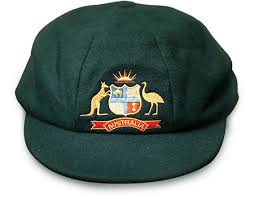
(Insert your 1940s cap image here) By the 1940s, green and gold were firmly established in Australian sport. Cricket teams, Olympic athletes, and national squads across multiple codes proudly wore the colours, strengthening the connection between sport and national identity.
Post‑War Identity and National Pride (1950s–1970s)
As Australia’s presence grew on the world stage, green and gold became a unifying symbol. The colours appeared in uniforms, merchandise, and international events, becoming instantly recognisable to audiences worldwide.
1984 — Official Proclamation
On 19 April 1984, Governor‑General Sir Ninian Stephen formally proclaimed green and gold as Australia’s national colours. This decision recognised more than 80 years of tradition and cemented the colours as a core part of Australia’s identity.